
English – Arabic Arabic – English
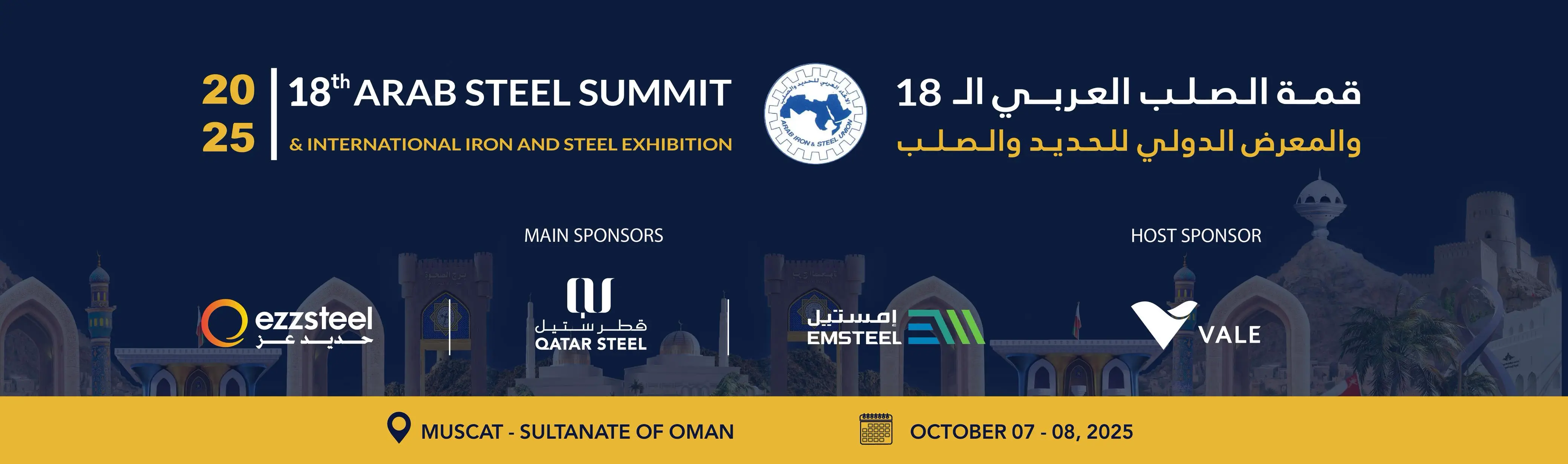
Agenda of the 18th Arab Steel Summit – 2025
08:00 – 09:00 : Registration
09:00 – 09:30 : Opening Session
09:30– 10:30 : Panel 1 : CEO Summit “Visions of Arab Steel Leaders Facing the Challenges and Opportunities of Tomorrow”
In a rapidly changing global context, the Arab steel industry stands at a strategic crossroads. Major transitions—energy, environmental, and digital—are reshaping industrial value chains, business models, and global trade balances.
As global markets close due to new tariff and environmental barriers, cost and regulatory pressures intensify, and international players increase investments in green steel, the Arab world must define its own strategic vision.
This exclusive panel, reserved for top CEOs in the Arab steel sector, aims to open a frank and forward-looking dialogue around the following key questions:
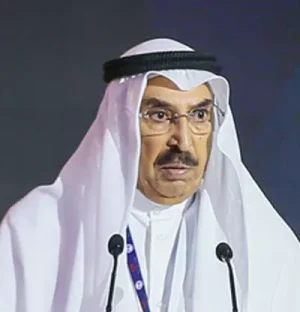
Chairman – AISU
Welcome Remarks by the Chairman of ِِAISU

Keynote Speech by the H.E. Minister of Energy and Minerals, Oman

Secretary General – AISU
Keynote Speech by Secretary General of AISU
10:30 – 11:00 : Exhibition Opening
11:00 – 11:30 : Keynote Speaker (Dr. Mahmoud Mohieldin- UN Special Envoy on Financing the 2030 Sustainable Development Agenda)
11:30 – 12:30 Panel 2: « Investments in Infrastructure and Housing and Their Role as a Key Driver of Steel Demand in Arab Countries ».
This session paves the way for a deeper understanding of the dynamics of steel demand in Arab markets by highlighting the scale of Arab investments in infrastructure and housing, and their role in generating demand for finished steel products. It also examines the role of local industry in meeting this demand and the extent of reliance on imports to satisfy domestic consumption.
The session aims to provide a unified knowledge base grounded in facts, figures, and current trends, forming a common foundation that enhances the quality of discussion and analysis in the sessions that follow.
12:30 – 13:30 Panel 3: « Global Steel Overcapacity and New Protectionist Policies »
The global steel industry is experiencing ongoing imbalances, with production capacities in several regions—particularly in Asia—exceeding demand. This results in mounting price pressures, dumping practices, and a surge in trade protection measures.
In the Middle East and North Africa (MENA) region, many countries are working to expand their production capacities without effective regional coordination, at a time when local markets remain limited and vulnerable to competition from low-cost imports. This dual trend of domestic expansion amid external pressures heightens the risk of an unregulated regional production surplus, which threatens market balance and undermines the ability of local producers to remain viable and competitive.
In this context, this high-level session aims to raise collective awareness, open constructive regional dialogue, and present practical and actionable recommendations to ensure the sustainability and competitiveness of the sector.
13:30– 15:00 – Lunch Invitation– by Arab Iron and Steel Union
15:00 – 16:00 Panel 4: « Outlook into the New Technologies and Efficiencies in Steel »
This session will examine near and mid term technological advances and operational approaches that can raise productivity, reduce costs and carbon intensity, and improve product quality across the steel value chain.
Panelists should compare disruptive innovations (e.g., hydrogen DRI, electrification, scrap based routes) with incremental process and digital improvements (advanced process control, predictive maintenance, energy integration) and explore how these options can be deployed at commercial scale.
15:20 – 16:10 : Panel 4: « Challenges and opportunities for decarbonization in the steel industry»
The global steel industry is facing a growing challenge due to the noticeable decline in investments directed toward carbon emission reduction projects, at a time when international pressures are mounting to meet sustainability goals and achieve carbon neutrality. While governments and international organizations are pushing for stricter standards to curb emissions, economic challenges and the high cost of financing continue to hinder the expansion of green solutions.
Despite this decline, sustainability requirements in the steel sector remain a strategic necessity in the medium and long term, as they represent a foundation for the industry’s continuity and for strengthening its competitiveness in global markets. This creates a dual challenge: balancing the need to increase investments in low-carbon technologies—such as green hydrogen, renewable energy, and recycling—against the economic pressures that may slow the pace of transition toward a more sustainable steel industry.
16:00 – 16:40 : Panel 5 : Omani Ministry of Energy Presentations
16:40 – End of Day 1
19:30 – 22:00 : Networking Dinner
Buses will depart from the hotel at 19:00
19:30 – 22:00 : Dinner invitation by Vale
09:00 – 09:15 : Address by H.E Qais bin Mohammed Al Yousef, Minister of Commerce, Industry, and Investment Promotion of the Sultanate of Oman.
09:15 – 09:30 : Honouring of H.E the Omani Minister of Commerce, Industry, and Investment Promotion by the Arab Iron and Steel Union.
09:30 – 10:20 : Panel 6: « Securing Raw Material Supplies for the Arab Steel Industry – Logistical and Geopolitical Challenges Facing Middle Eastern Producers »
The Arab steel industry faces growing challenges in securing stable supplies of raw materials, particularly iron ore pellets. Producers in the Middle East rely heavily on imports from Brazil, Canada, EU, Bahrain and Oman.
Geopolitical, logistical, and economic disruptions directly impact production efficiency and costs in the region.
The panel will focus on the key risks and challenges while exploring ways to enhance resilience, regional integration, source diversification, and infrastructure development.
10:20 – 11:20 : Panel 7 : « Demand for DRI Technology in Light of Future Gas and Iron Ore Prices »
As global pressure to reduce carbon emissions intensifies and the shift toward more sustainable production paths accelerates, Direct Reduction Iron (DRI) technology has emerged as a key pillar in the steel industry’s transformation strategies.
However, the wider adoption of this technology is not solely dependent on its technological readiness—it is heavily influenced by the future trajectory of natural gas and iron ore prices, which are the two primary inputs shaping cost structures and economic feasibility.
This session will shed light on the supply and demand dynamics of natural gas and iron ore and examine how these factors impact investment decisions in DRI pathways, particularly in emerging markets and high-production economies. The discussion will also address the challenges faced by gas-importing countries versus the opportunities available to resource-rich nations.
Does DRI technology represent a realistic and flexible option amid global market volatility?
And will future prices accelerate or slow down the adoption of this pathway?
11:20 – 11:50 – Coffee Break
11:50 – 12:50 : Panel 8 : « Tariffs in Major Steel Markets and the Role of Governments in Protecting Arab Steel Exports »
In today’s global landscape, which is witnessing a resurgence of protectionist policies—particularly from major economies aiming to shield their local industries from overcapacity and foreign competition—Arab steel producers are facing increasing tariff, financial, and regulatory barriers that directly impact their exports and competitiveness.
The consequences go beyond the steel sector, affecting downstream industries such as automotive, construction, machinery, and equipment manufacturing, all of which rely heavily on steel as a fundamental input.
As Arab steel exports feel the weight of these protectionist measures, the need becomes urgent for a more proactive role from Arab governments in defending the interests of domestic producers. This includes negotiating balanced trade agreements, leveraging international legal frameworks, and supporting the sector’s competitiveness.
Session Objectives: To explain the current and expected impact of these tariff measures on Arab exporting companies. To explore how Arab countries can adopt integrated strategies to safeguard their steel exports.
12:50 – 13:40 : Panel 9 : « Special Arab Steel Markets »
Steel markets in some Arab countries, such as Syria, Iraq, and Yemen, are characterized by their unique economic, political, and production challenges.
Despite limited local production, these markets present promising opportunities due to the growing demand for construction materials and reconstruction needs.
The session will focus on analyzing the factors influencing the growth of these markets, from investment opportunities to stability and logistics. It will also discuss the role of regional cooperation in supporting these markets and enhancing their integration with other Arab steel-producing and exporting countries.
13:40 – 15:00 – Lunch Invitation – by Ezz Steel
15:00 – 15:50 : Panel 10 : “ The Strategic Scrap Challenge: Building a Circular Steel Economy in the Arab World ”
Scrap accounts for about 40% of the raw materials used in Arab steel production, and its share is continuously increasing.
Scrap plays a pivotal role in modern steel industry strategies as a lower-emission raw material compared to traditional iron ore.
It is considered a cornerstone for building a circular economy based on recycling and waste reduction.
15:50 – 16:20 : 2nd Scientific Research Award – Iron and Steel Sector (Muscat 2025)
As part of its mission to support innovation in the Arab steel industry, the Arab Iron and Steel Union (AISU) is organizing the second edition of the Best Scientific Research Award, in partnership with the Association for Iron & Steel Technology (AIST).
Following the success of the first edition in Doha (2024), the Muscat 2025 edition confirms growing interest from the Arab scientific community in technological, environmental, and industrial challenges within the sector.
For this edition, nearly 30 research papers were received, submitted by researchers, engineers, and PhD candidates from universities, technical institutes, and industrial firms. After initial review, 20 papers from 10 Arab countries were selected for detailed evaluation by an international AIST scientific committee based on strict criteria: originality, scientific rigor, industrial applicability, and impact.
This initiative reflects AISU’s vision to:
Jury: In cooperation with ِAIST
16:20 – 16:50 : Closing Refreshments
16:50 – End of Day 2
18:00 – 20:00 : Special Evening Organized by VALE
Buses will depart from the hotel at : 17:30
A special evening to close the 18th Arab Iron and Steel Summit in style: